PulseCare-Precision Monitoring SaaS for Post Operative Recovery

Category: Healthcare SaaS, Product Design
Role: Lead Product Designer & Clinical Strategist
The Overview
Post-operative care is a high-stakes environment where every second counts. However, most clinical monitoring tools today act as "Digital Spreadsheets"—static, fragmented, and overwhelming. PulseCare was designed to change that. It is a high-precision Command Center that correlates live vital signs with historical recovery trends and medication administration.
The Problem: Alert Fatigue & Data Fragmentation
In a 12-hour nursing shift, "Alert Fatigue" is a silent killer. Clinical staff are bombarded with hundreds of notifications but lack the immediate context to prioritize them.
The Gap: Vitals live in the monitor, while medication logs live in the patient’s chart.
The Risk: Delayed detection of complications due to the cognitive load of switching between screens to find a "Clinical Signal."
The Solution: A Pharmacist-Led Design Approach
Leveraging my background in pharmacy, I approached the UI as a Clinical Decision Support tool. Instead of just showing data, PulseCare focuses on Correlation. The core of the system is the Patient Command Center. This view merges the real-time monitoring feed with a 30-day recovery timeline.
Key Innovation: Medication Correlation (MAR Overlay) The standout feature is the overlay of the Medication Administration Record (MAR) directly onto the symptom trend charts. This allows a nurse to instantly visualize the relationship between a drug dose and a patient's physiological response—answering the critical question: "Is the patient responding to the treatment, or is a complication arising?"
Key Features
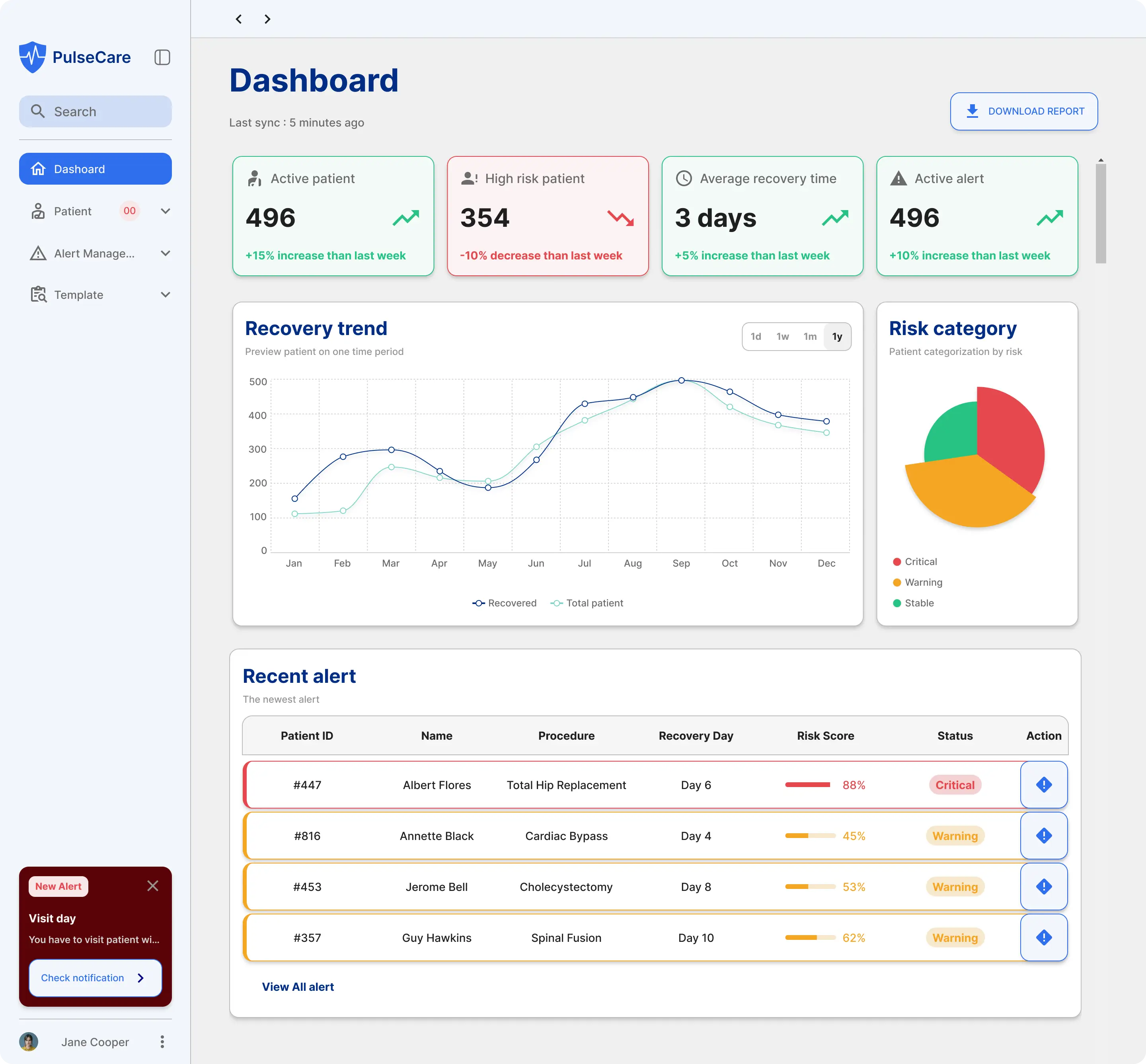
The Ward Dashboard: A high-level triage hub for nursing stations to monitor ward-wide health and alert distribution at a glance.
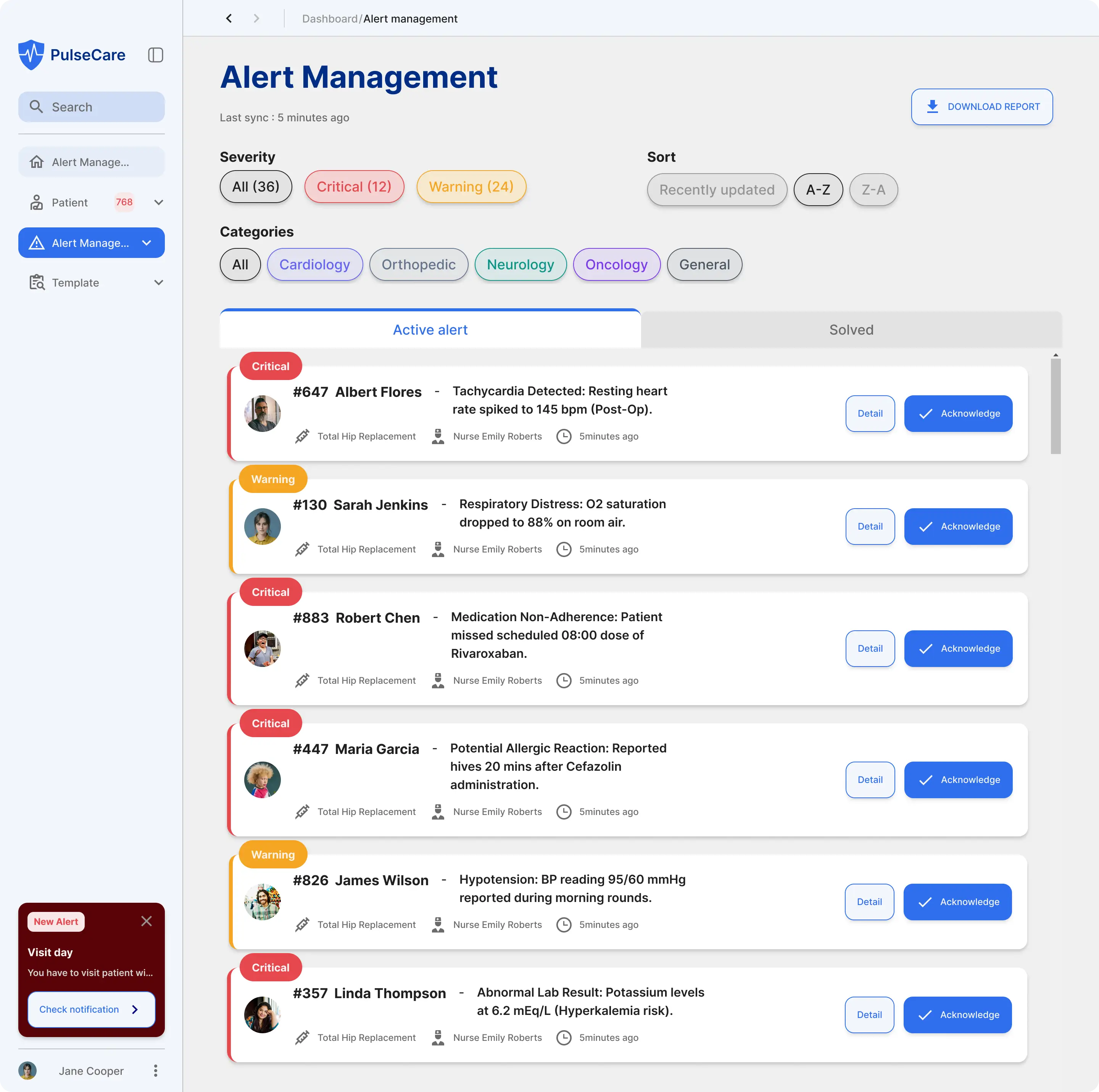
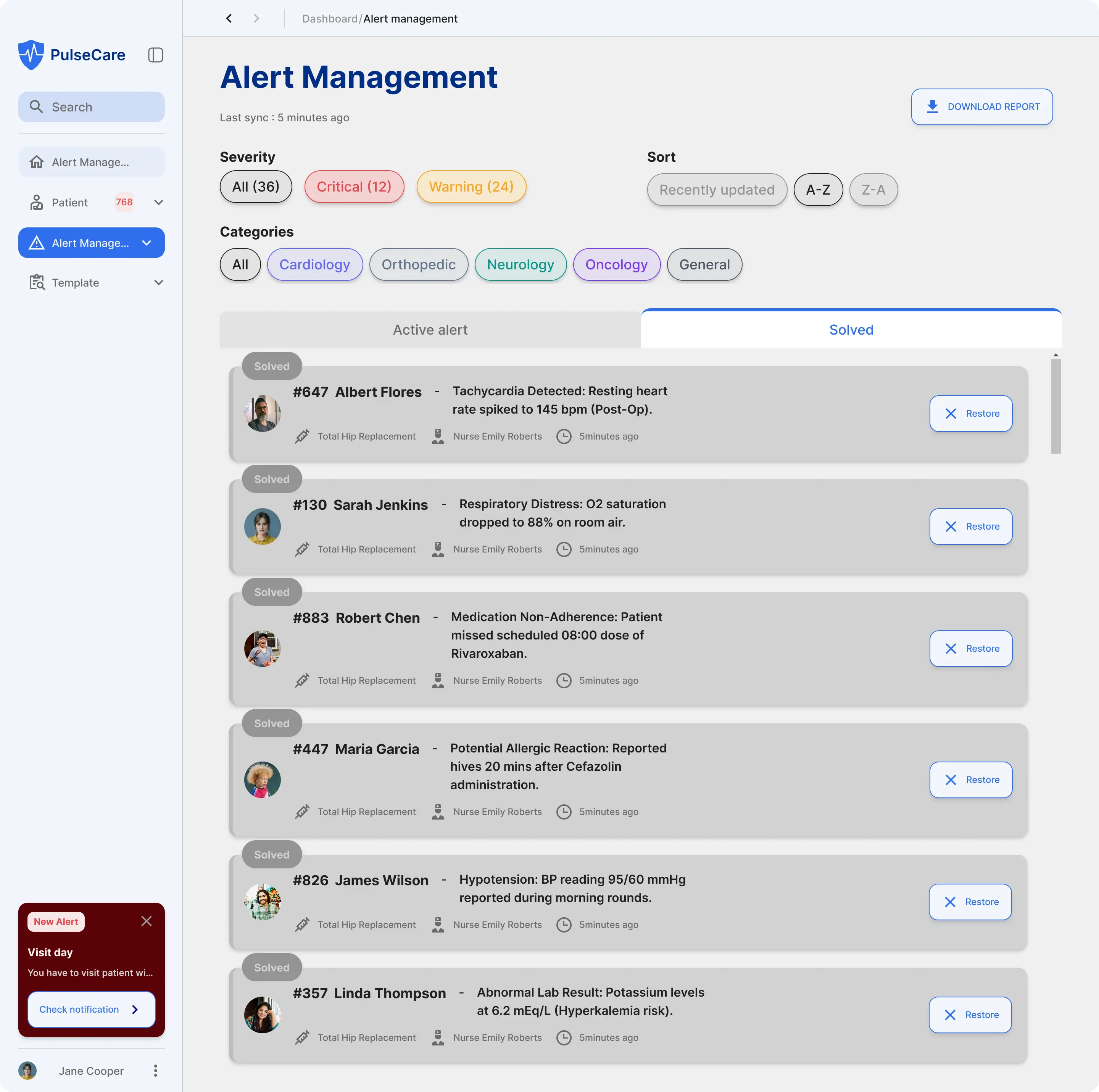
Alert Management System: A semantic-triage feed that uses strict color integrity to reduce noise and focus attention on life-critical events.
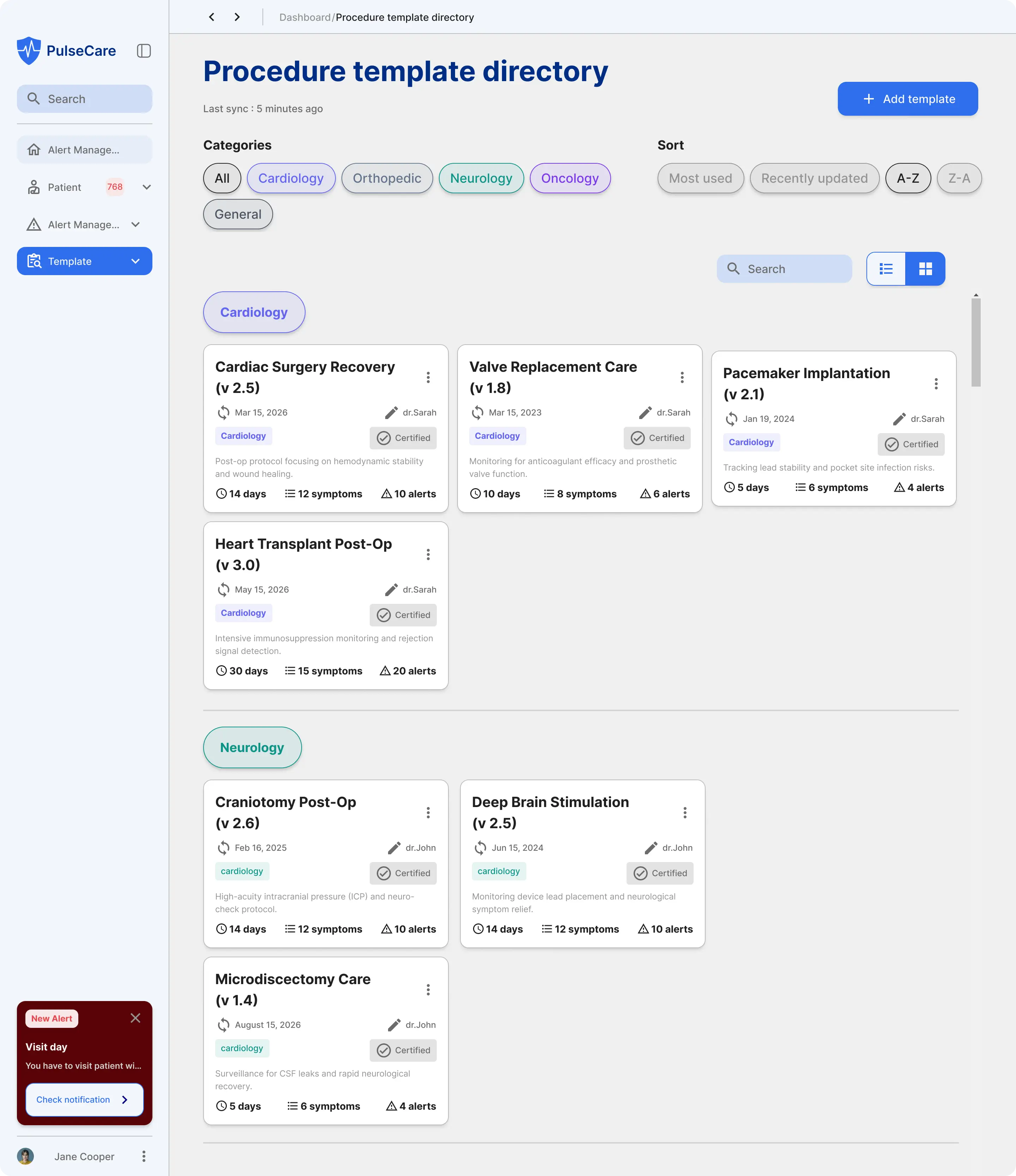
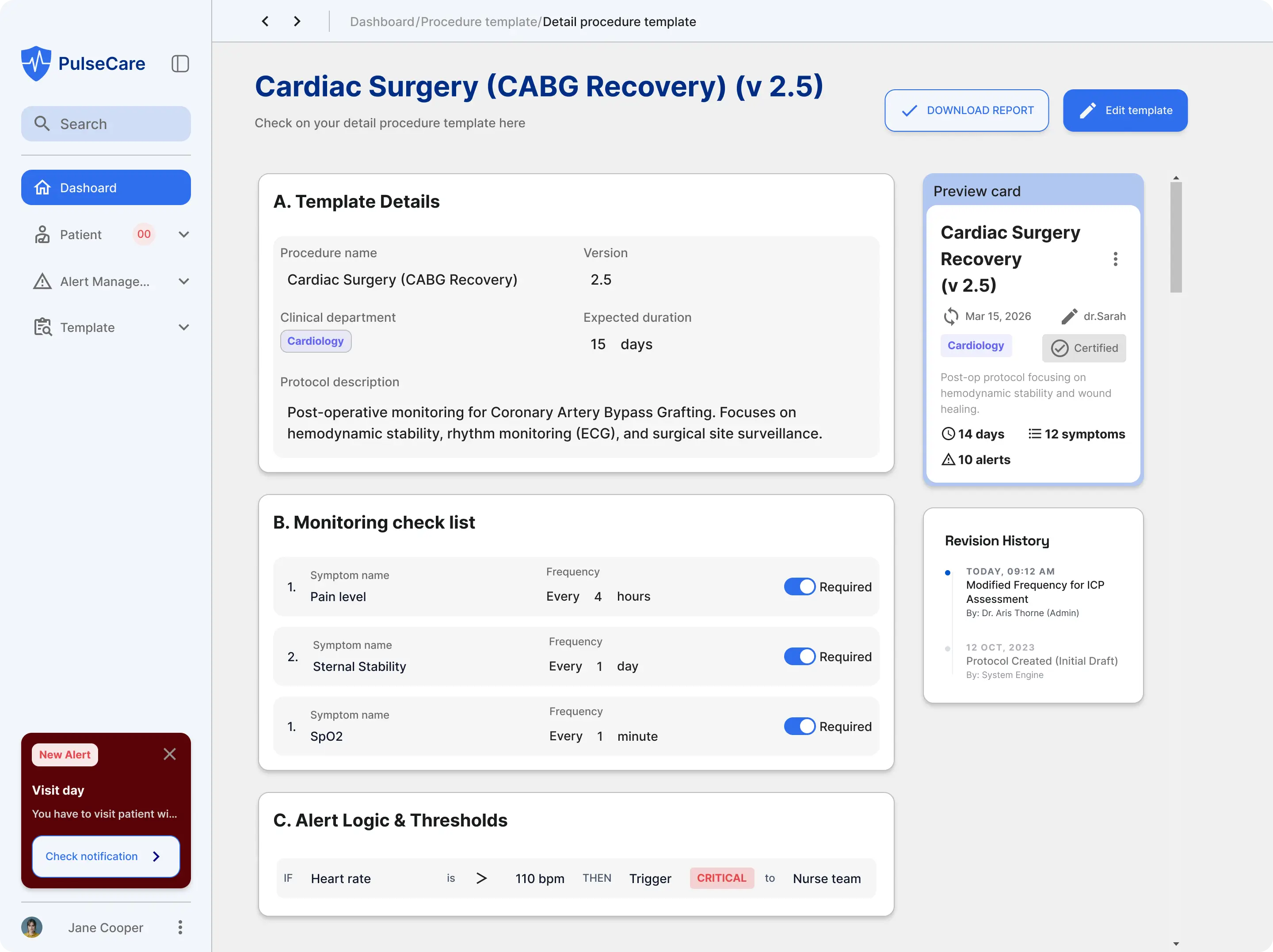
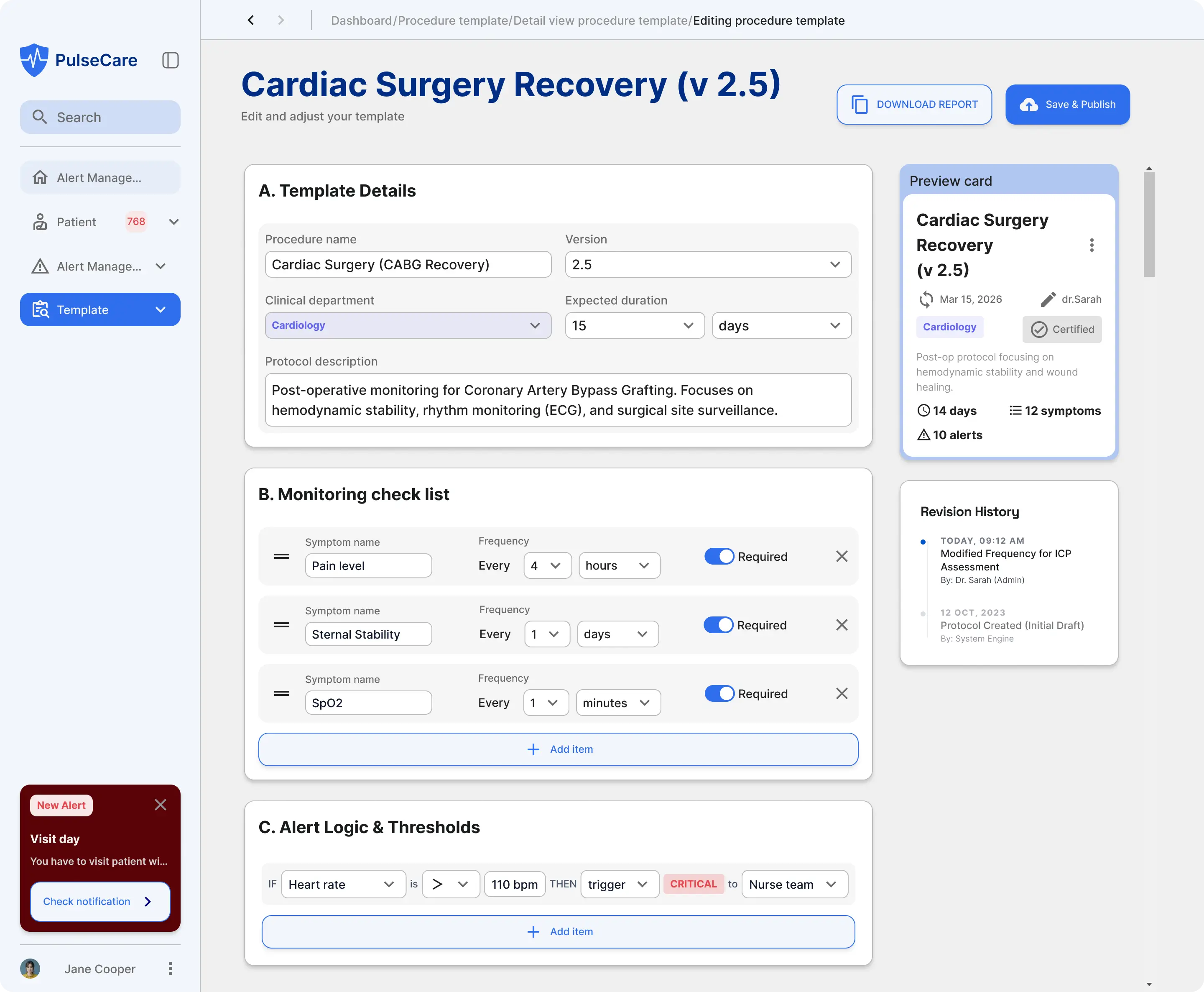
Procedure Protocol Builder: A logic-heavy interface allowing senior clinicians to set "Master Rules" and alert thresholds for specific surgical recoveries (e.g., Cardiac vs. Orthopedic).
Technical Precision
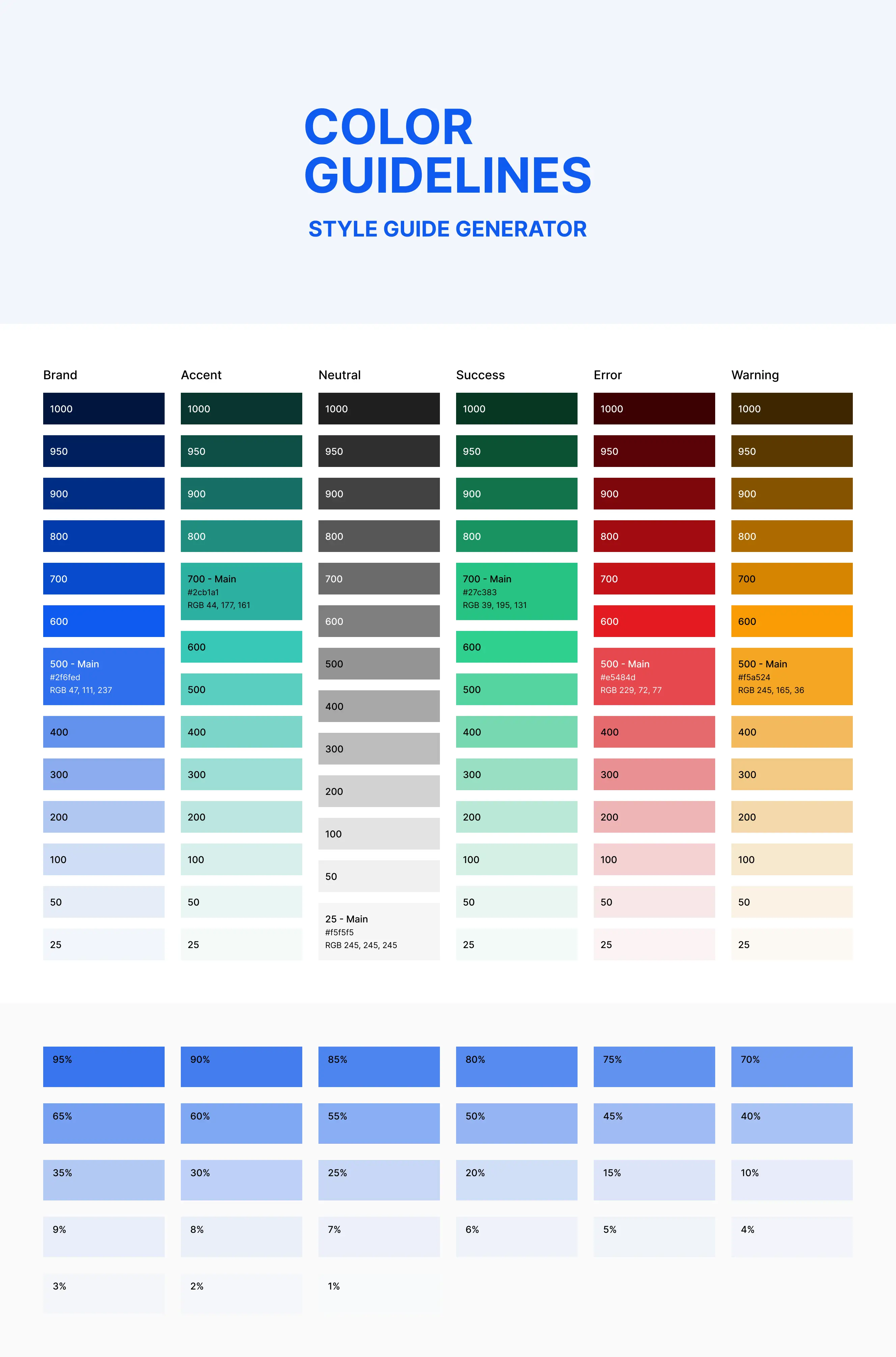
To ensure PulseCare is production-ready, I implemented a rigorous design system:
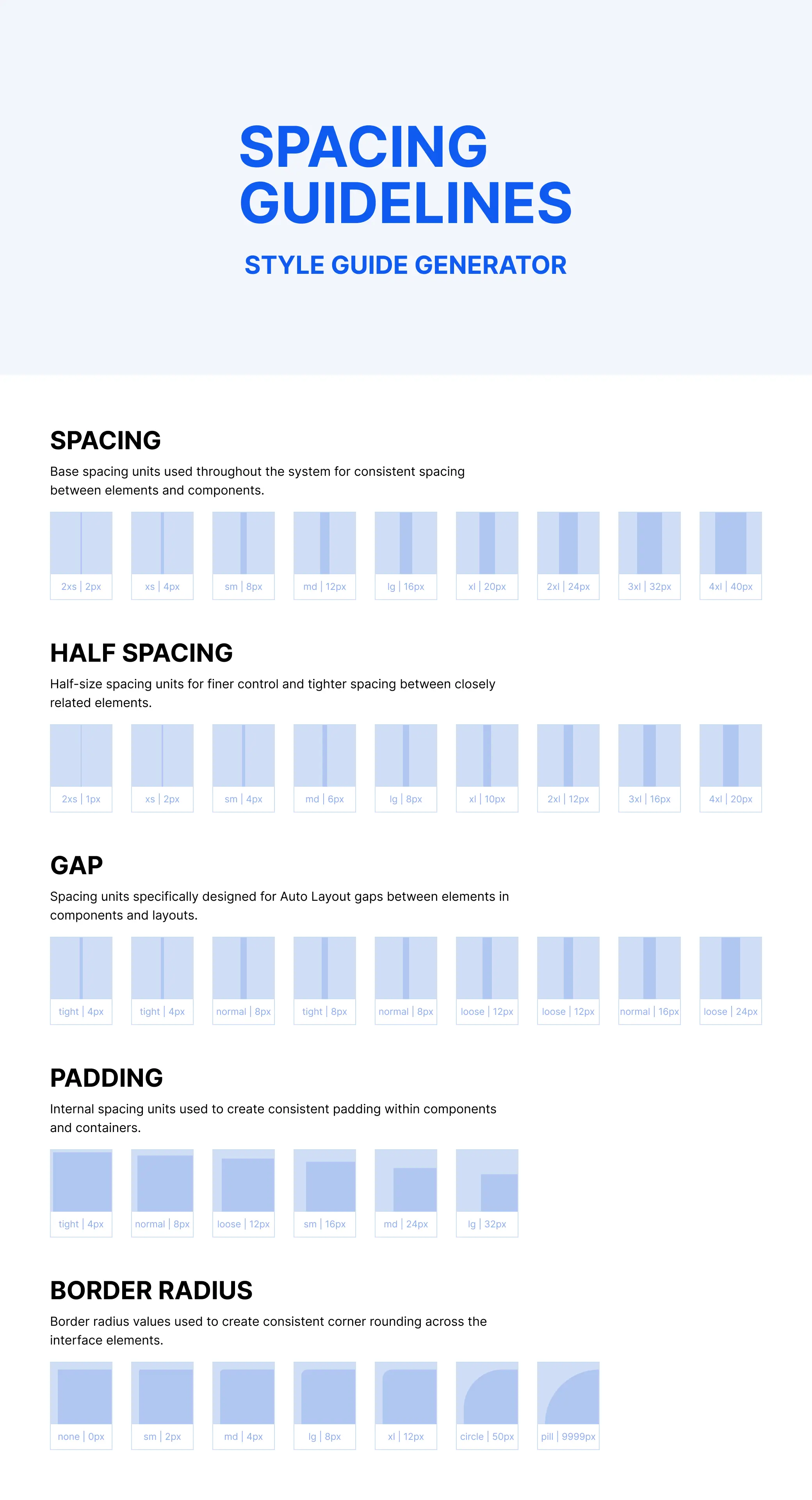
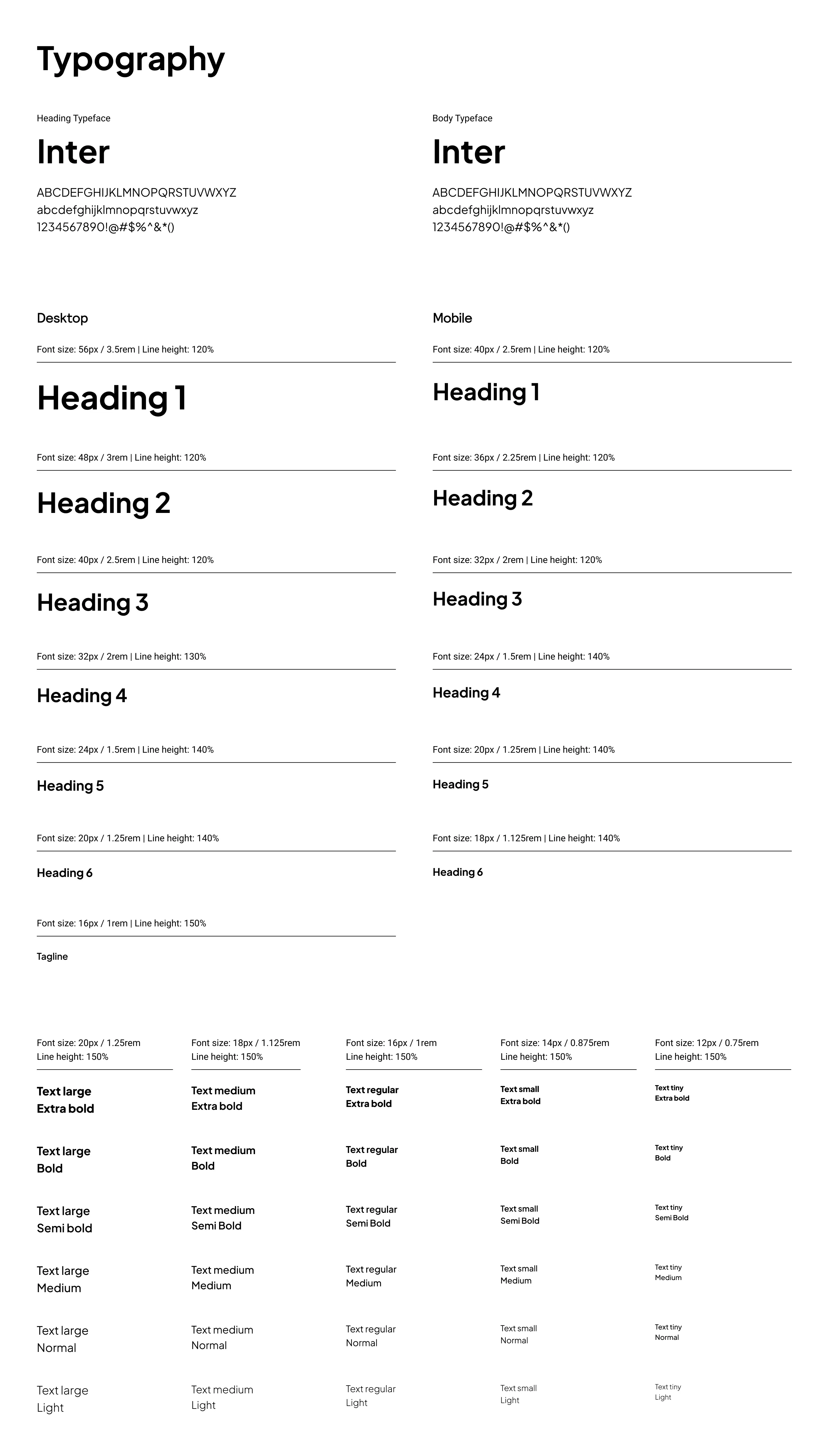
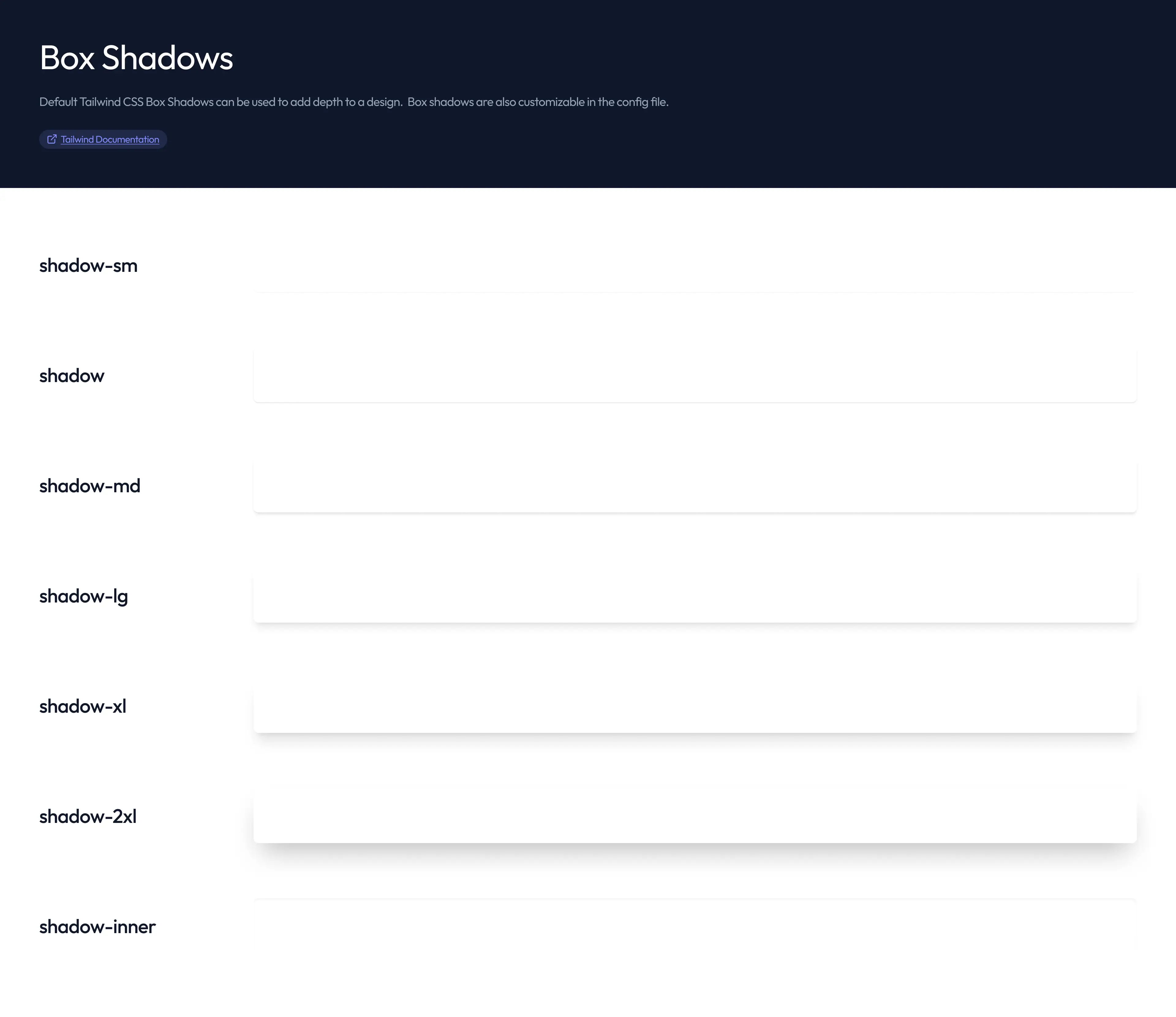
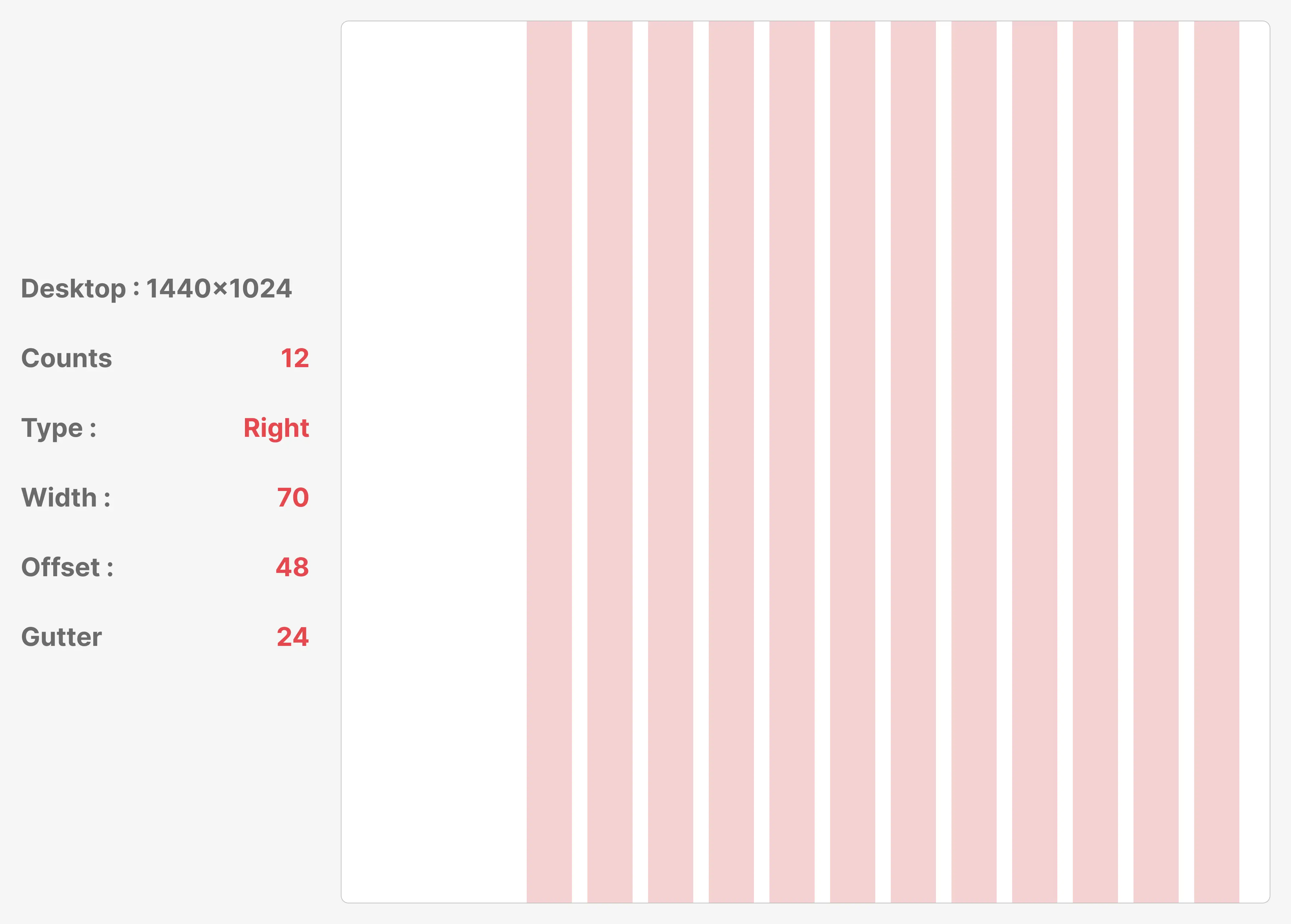
4pt Grid System: Ensuring pixel-perfect scalability for developers using React and Tailwind.
WCAG 2.1 AA Compliance: Every contrast ratio was verified to ensure legibility under harsh hospital lighting and high-glare screens.
Semantic Integrity: Strictly reserving Red, Orange, and Green for clinical status triage to prevent "User Hallucination."
The Result
PulseCare moves clinical monitoring from Reactive to Proactive. By reducing fragmentation, the platform empowers healthcare workers to detect early warning signs, analyze them with full context, and act with clinical confidence.
Let’s Build the Future of HealthTech
Interested in how I combine clinical expertise with high-density SaaS design? Let's connect and discuss how I can help your team build high-trust medical interfaces.